Flat Roof Leak Repair: 5 DIY Tips & Professional Fixes
Puetz Construction | 8 Minute Read
Flat roofs are a smart, practical choice for many commercial buildings — they’re durable, efficient, and easy to maintain when properly cared for. But over time, exposure to sun, rain, and temperature fluctuations can cause small leaks that grow into serious problems if left unaddressed. Knowing how to handle flat roof leak repair can save business owners thousands of dollars and help extend the life of their roofing system.
If you’re currently dealing with a leak or suspect roof damage, you can explore repair and replacement options on our commercial roofing page to better understand which solution fits your building’s needs.
In this guide, you’ll learn:
- The common causes of leaks in commercial flat roofs
- DIY inspection and short-term repair methods
- When to call a professional for lasting fixes
- Preventive maintenance tips to protect your investment
Why Addressing Roof Leaks Quickly Matters
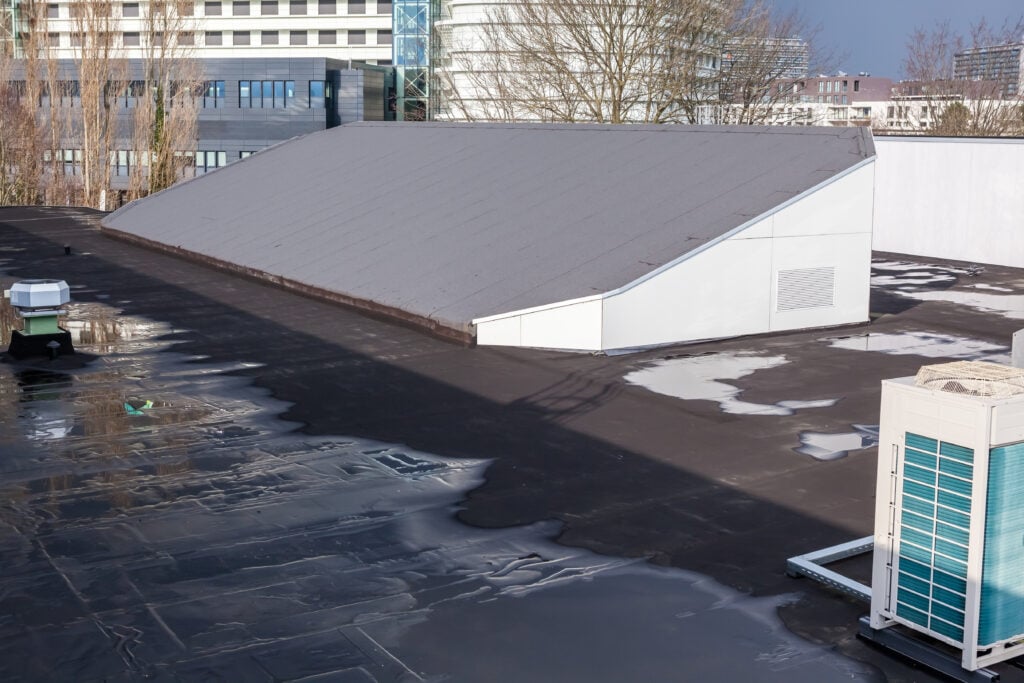
Flat roofs play a critical role in protecting your business operations, inventory, and employees. A small leak might seem harmless at first, but even minor water intrusion can lead to structural damage and health hazards. For business owners in Austin and surrounding areas, where heavy rain and snowmelt are common, staying proactive can prevent major disruptions.
Here’s why immediate attention is crucial:
- Prevent Interior Damage: Leaks can ruin insulation, ceiling tiles, and equipment within days if not contained.
- Avoid Structural Issues: Water trapped within layers of roofing can weaken decking and joists, leading to costly repairs.
- Reduce Business Downtime: Prompt repairs prevent interruptions that could impact operations or tenant satisfaction.
- Preserve Energy Efficiency: Wet insulation loses its thermal value, forcing HVAC systems to work harder.
- Maintain Warranty Coverage: Many manufacturers require regular maintenance and timely repairs to keep warranties valid.
5 Common Causes of Flat Roof Leaks
Before jumping into repairs, it’s important to understand what typically causes leaks. Identifying the source ensures your repair — whether DIY or professional — truly solves the problem.
1. Poor Drainage or Ponding Water
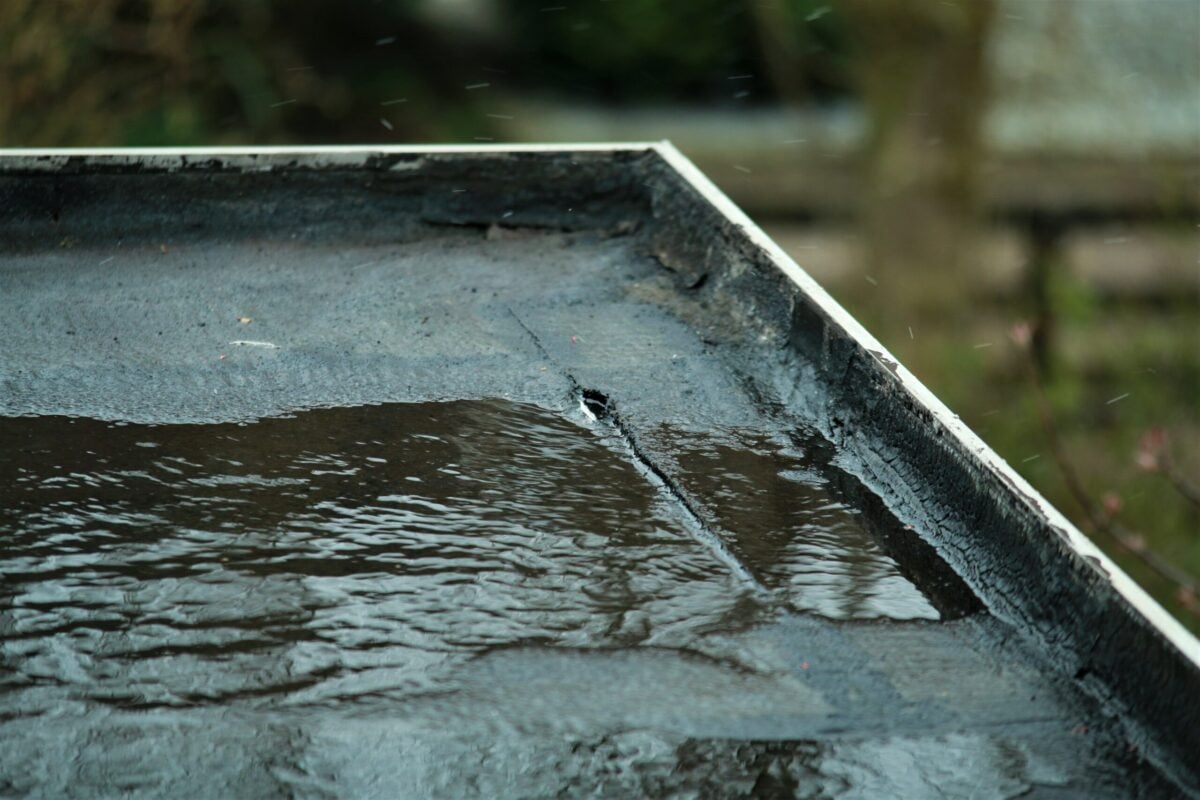
Flat roofs are designed with subtle slopes to encourage drainage. When drains, scuppers, or gutters become clogged, standing water can accumulate and seep through weak spots.
- Pooling water adds unnecessary weight to the roof.
- Constant exposure to moisture accelerates membrane deterioration.
- Over time, the structure below can rot or corrode.
2. Damaged or Aged Membrane
Most commercial roofs use single-ply materials like TPO, EPDM, or PVC. These membranes naturally expand and contract with temperature changes.
- Cracks, blisters, or punctures often form after years of weathering.
- Improper installation or poor adhesion can lead to seam separation.
- Debris, rooftop foot traffic, or sharp tools can puncture the surface.
3. Flashing Failures
Flashing seals roof edges, vents, and HVAC units — all common points where leaks start.
- If flashing loosens or pulls away, water easily enters the structure.
- UV exposure and thermal expansion can weaken adhesives over time.
- Poor workmanship during installation increases failure risk.
4. Roof Penetrations and Equipment
Rooftop HVAC systems, skylights, and vents create natural vulnerabilities. Each penetration must be sealed correctly.
- Loose fasteners or degraded sealant can allow water to seep in.
- Condensation from HVAC systems often causes pooling or mold.
5. Aging Roof System
Most flat roofs last 20–30 years with proper care. As materials reach the end of their life, leaks become more frequent, even with regular patching.
- Aging membranes lose flexibility and crack more easily.
- Seams and adhesives begin to break down.
- At this stage, replacement is often more cost-effective than ongoing repairs.
DIY Tips for Temporary Flat Roof Leak Repair
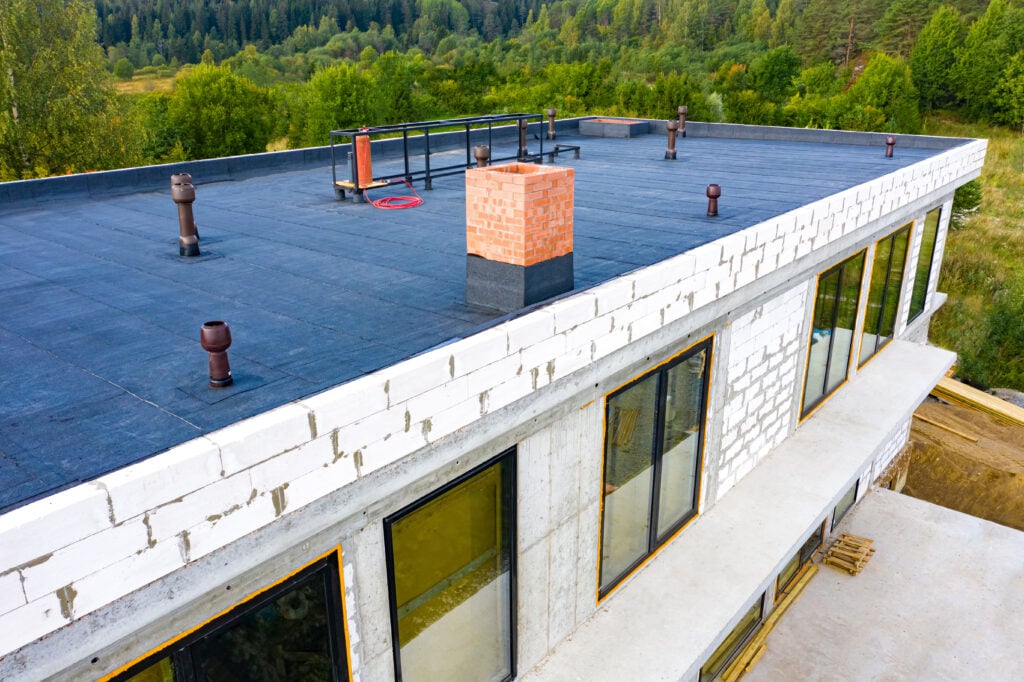
When you notice a leak inside your building, immediate action can help prevent additional damage. While these steps aren’t a permanent fix, they can buy time until a professional roofer arrives.
1. Locate the Source of the Leak
Water often travels before appearing inside the building, making the source tricky to find.
- Check directly above interior water stains.
- Inspect seams, flashing, and rooftop equipment nearby.
- Look for puddles or damp insulation under the membrane.
Tip: Bring a flashlight and chalk to mark suspected areas for easier reference during repair.
2. Clear Standing Water and Debris
Before applying any repair materials, make sure the area is clean and dry.
- Use a push broom or squeegee to remove ponding water.
- Clear leaves, dirt, or debris that could interfere with sealants.
- Dry the surface with towels or a heat gun for best adhesion.
3. Apply a Temporary Patch
For small punctures or cracks, a quick patch can minimize water intrusion.
- Use a commercial-grade patching compound or rubber roof sealant.
- Apply over the damaged area, extending a few inches beyond the leak.
- Press firmly to remove air bubbles, and cover with a patch membrane if available.
Note: Always check product compatibility with your roofing material (EPDM, TPO, PVC, etc.).
4. Use Roof Tape for Emergency Repairs
Self-adhesive roof tape is another effective short-term fix.
- Cut the tape to size and apply it directly over the leak.
- Press down with a roller to ensure full contact.
- This method works best on dry, smooth surfaces.
5. Monitor the Area
Check your patch regularly until a professional can inspect the roof. If new leaks appear, it’s likely the issue is larger than a surface crack or puncture.
Important: DIY solutions are temporary. Without addressing underlying issues like aging materials or drainage problems, leaks will return.
Professional Flat Roof Leak Repair Solutions
For long-term results, commercial roofing specialists use advanced materials and techniques designed for durability and waterproofing.
Roof Inspection and Moisture Scanning
Professional contractors begin with a detailed inspection using infrared scanners or core samples. This process detects hidden moisture beneath the membrane and identifies damaged insulation areas.
Seam and Flashing Repairs
Roofers reseal open seams, replace failing flashing, and reinforce critical junctions. Heat-welding or specialized adhesives restore watertight integrity without replacing the entire system.
Coating Application
Elastomeric coatings provide an additional waterproof layer and reflect UV rays to reduce heat absorption. They’re especially effective for extending the lifespan of TPO, PVC, or modified bitumen roofs.
Advantages:
- Seals small leaks and hairline cracks
- Improves energy efficiency
- Adds 10–15 years of protection when properly maintained
Partial Roof Replacement
If leaks are confined to one section, a partial replacement may be an option. Roofers remove the damaged membrane and insulation while preserving the unaffected areas.
Full Roof Replacement
When a roof has extensive moisture damage, deteriorated insulation, or multiple layers of patchwork, full replacement is often the only viable solution. While more costly upfront, it offers long-term peace of mind, performance, and warranty protection.
Comparing DIY vs. Professional Repair
The table below outlines the major differences between temporary fixes and professional services for flat roof leaks.
| Factor | DIY Repair | Professional Repair |
| Cost | Low (short-term materials only) | Moderate to high (depends on damage) |
| Longevity | Temporary (days to months) | Long-term (years to decades) |
| Effectiveness | Limited to small surface leaks | Addresses structural and hidden issues |
| Safety | Potential risk without equipment | Certified and insured technicians |
| Warranty | None | Often includes manufacturer and labor warranty |
| Best For | Emergency patching | Permanent waterproofing and system upgrades |
For properties in Austin and surrounding areas, combining immediate DIY containment with professional follow-up ensures both safety and longevity.
Preventing Future Flat Roof Leaks
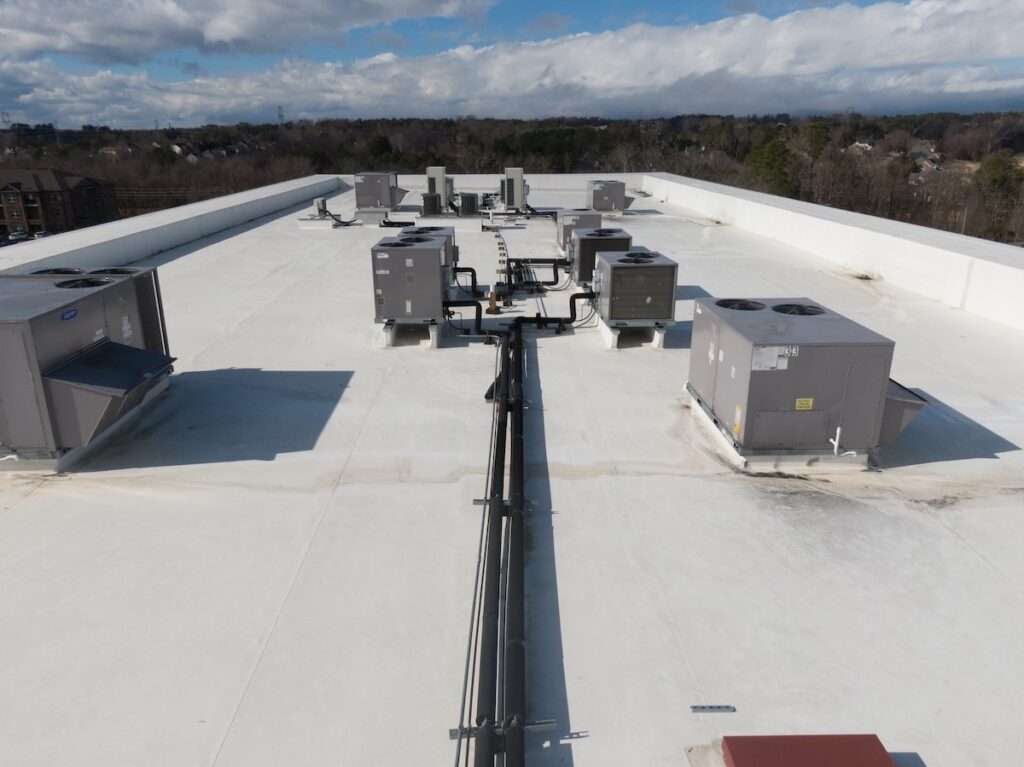
The best way to save money on repairs is to prevent leaks before they start. With routine maintenance and inspection, you can identify small issues early and keep your roof watertight for decades.
Schedule Routine Inspections
Inspect your roof at least twice a year — ideally in spring and fall — and after major storms. Professional inspections catch seam separation, punctures, or drainage issues before they escalate.
Maintain Drainage Systems
Clean drains, scuppers, and gutters regularly to prevent water buildup. Even small blockages can lead to ponding and leaks.
Protect High-Traffic Areas
Install walk pads near HVAC units and maintenance routes to prevent punctures from foot traffic or dropped tools.
Check Flashing and Penetrations
Sealant and flashing should be inspected annually. Replace cracked or peeling sealant to maintain a watertight barrier.
Apply Reflective Coatings
A reflective coating not only extends roof life but also enhances energy efficiency by reducing surface temperature.
Keep Detailed Records
Maintain documentation of inspections, repairs, and warranties. This helps identify recurring issues and protects your investment during insurance or warranty claims.
When to Call a Professional
While DIY repairs can temporarily slow a leak, professional roofers have the expertise and tools to identify root causes and prevent future failures. Call a commercial roofing expert if:
- Leaks persist after patching.
- Water stains reappear on ceilings or walls.
- There’s evidence of structural sagging or mold growth.
- Your roof is over 20 years old.
Timely professional repair minimizes downtime and prevents further property damage — a must for business owners managing multiple tenants or high-value equipment.
Protect Your Building with Expert Roofing Solutions
Every hour spent managing a leak can mean lost productivity, increased repair costs, and safety risks. Whether your commercial property needs inspection, patching, or a full replacement, acting quickly ensures your roof continues to perform reliably.
For business owners in Austin and surrounding areas, our commercial roofing specialists provide professional inspections, leak detection, and long-term repair options tailored to your facility. To schedule a service or learn more about your options, contact us today to discuss your flat roof leak repair needs.
Fresh From our Blog