4 Best Flat Roof Drainage System Options Explained
Written By: Justin Puetz | April 29, 2026 | 9 Minute Read

Water has nowhere to hide on a flat roof. Without the right flat roof drainage system in place, even a modest rainstorm can turn into a pooling problem that quietly destroys insulation, membrane layers, and the structural integrity beneath them. Whether you own a commercial building, an industrial facility, or a large residential property, understanding how water moves and where it goes is one of the smartest investments you can make. If you are already dealing with drainage concerns or planning a roof replacement, learning about the full range of flat roofing solutions available can help you make a more informed decision.
Here is what you will learn in this guide:
- The reasons proper drainage is critical to flat roof performance and longevity
- The four main types of flat roof drainage systems and how each one works
- Maintenance tips to keep your drainage system performing year after year
- How to choose the right drainage option based on your building type and climate
Why Flat Roof Drainage Is Not Optional
Flat roofs are not actually flat. They are designed with a slight slope, typically between one-quarter and one-half inch of drop per foot, to encourage water movement. But even a well-engineered slope cannot do the job alone without a properly matched drainage system to handle the volume and direction of runoff. In areas like Winona and surrounding areas, where spring thaws and heavy seasonal rains are common, drainage failures show up fast and the damage adds up faster.
When drainage is ignored or underpowered for the job, the consequences range from minor nuisances to major structural repairs. Here is why getting this right from the start matters:
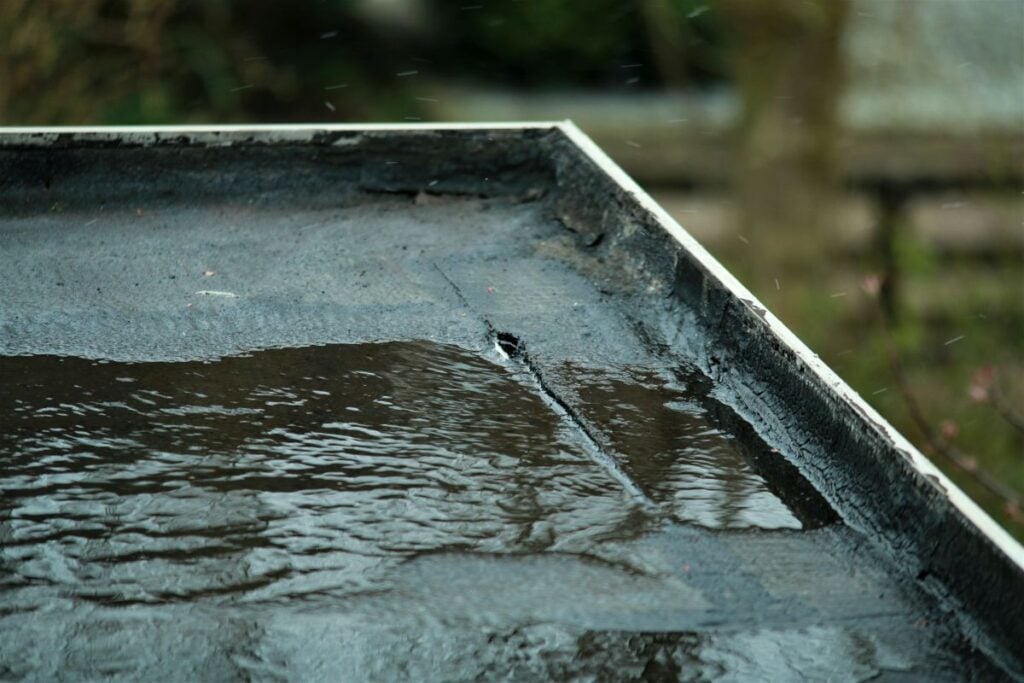
- Prevents ponding water: Standing water on a flat roof adds significant weight and creates the conditions for membrane deterioration, leaks, and mold growth inside the building.
- Extends roof lifespan: A drainage system that moves water away efficiently reduces wear on roofing materials, meaning your investment lasts years longer.
- Protects the building envelope: Water that finds its way through the roof does not stop there. It travels through insulation, decking, and walls, causing damage that is far more expensive to repair than the drainage system itself.
- Reduces liability: For commercial property owners, a leaking or structurally compromised roof can result in business interruption, tenant disputes, or safety hazards.
- Supports energy efficiency: Wet insulation loses its thermal performance. Keeping water out means your heating and cooling systems do not have to work overtime to compensate.
Investing in the right drainage solution during installation or replacement is almost always cheaper than addressing the water damage it prevents.
4 Types of Flat Roof Drainage Systems You Should Know
There is no single drainage solution that works for every building. The right choice depends on the roof design, the local climate, the building’s age, and the volume of water the system needs to handle. Below is a breakdown of the four primary options used on flat roofs today.
1. Interior Drains
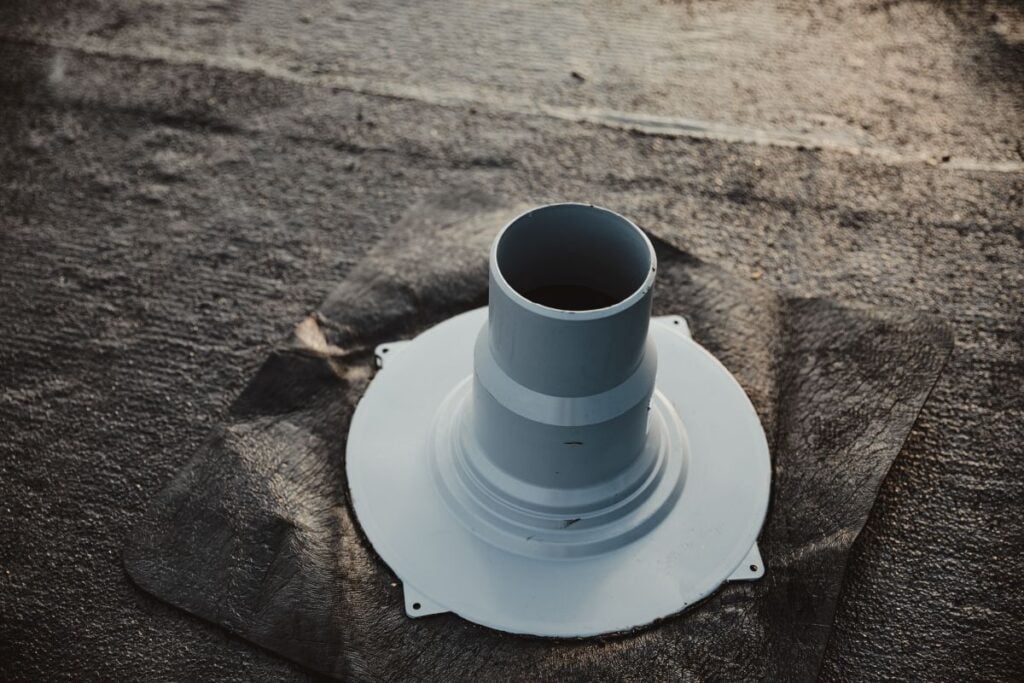
Interior drains are widely considered the most effective option for large commercial and industrial flat roofs. They are positioned at low points in the roof surface and connected to a network of pipes that run through the interior of the building to carry water to the municipal storm system or a retention area below.
- Positioned at the roof’s lowest points to collect water naturally as it flows
- Typically fitted with a dome-shaped strainer to catch debris and prevent clogs
- Can handle high volumes of water even during heavy rainfall events
- Pipes are protected from temperature extremes since they run inside the building
- Requires professional installation and periodic inspection to prevent interior pipe blockages
Interior drains are a strong choice for large, multi-zone roof systems where water needs to be channeled from multiple collection points simultaneously.
2. Scuppers
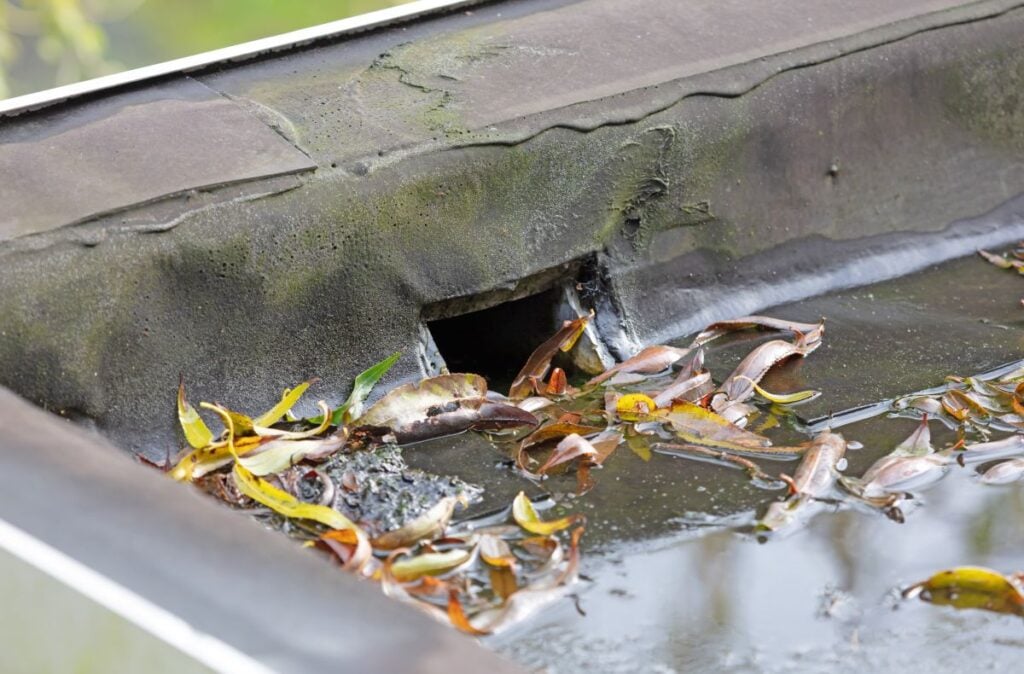
Scuppers are openings cut through the parapet wall at the roof edge, allowing water to flow through and off the building. They are one of the oldest and most straightforward drainage methods still in common use, and they work well when properly sized and positioned.
- Require no interior piping, which simplifies installation and reduces maintenance complexity
- Often paired with downspouts or conductor heads to direct water away from the building’s foundation
- Work best on roofs with consistent, well-defined low points along the perimeter
- Can become blocked by leaves, debris, and bird nesting material if not maintained regularly
- Available in aluminum, copper, stainless steel, and PVC depending on the application
Scuppers are a practical and cost-effective solution for many low-slope roofs, especially when interior drainage is not feasible due to the building’s structural layout.
3. Gutters and Downspouts
Gutters and downspouts are the most familiar drainage method for residential and light commercial flat roofs. Mounted along the roof edge, gutters collect runoff and channel it to downspouts that direct water to the ground or into a drainage system.
- Relatively low cost compared to interior drain systems
- Easy to inspect and clean without specialized equipment
- Work well for smaller roof areas with predictable water flow patterns
- Must be properly sloped toward downspouts to prevent standing water inside the gutter channel
- In cold climates, require attention to ice dam formation and freeze-thaw cycles that can pull gutters loose from the fascia
For building owners in Winona and surrounding areas managing smaller commercial or residential flat roof properties, a well-maintained gutter and downspout system can be a highly reliable and affordable drainage solution.
4. Siphonic Drainage Systems
Siphonic drainage is an engineered option designed for large, high-performance flat roofs. Unlike traditional gravity-based systems, siphonic drainage uses negative pressure to pull water through horizontal pipes at high velocity, allowing a single outlet to drain a much larger roof area.
- Requires fewer vertical drop points than conventional interior drain systems
- Horizontal pipe runs can span longer distances without the typical slope requirements
- Significantly reduces the amount of pipe and structural penetrations needed
- Best suited for large commercial buildings, warehouses, and industrial facilities
- Must be designed and installed by professionals with siphonic drainage expertise
- Higher upfront design and installation cost, but often saves money on materials and structural modifications
Siphonic systems are growing in use for new construction projects where roof design efficiency and reduced pipe infrastructure are priorities.
Maintaining Your Flat Roof Drainage System
Even the best-designed drainage system will underperform without consistent maintenance. In a region like Winona and surrounding areas, where seasonal debris accumulation and freeze-thaw cycles are routine, a proactive maintenance schedule is not just good practice — it is essential to protecting your investment.
Cleaning and Debris Removal
Leaves, dirt, bird droppings, and organic material build up in drains, gutters, and scuppers over time. A partial blockage can cause water to back up across the entire roof surface, accelerating wear on the membrane and increasing the risk of interior leaks.
- Clean drains and strainers at minimum twice per year: once in late spring after tree pollen and seed season, and once in late fall after leaf drop
- Inspect and clear scupper openings before and after any significant storm event
- Check gutters for debris accumulation and sagging after heavy snowfall or ice events
- Remove any vegetation or moss growth that has taken hold near drain openings
Inspecting for Damage and Wear
Drainage components do not last forever. Rubber gaskets around drain bodies crack over time. Metal scuppers can corrode or pull away from the roof membrane. Gutter hangers loosen. Catching these issues early is far less expensive than addressing them after a water event causes interior damage.
- Look for signs of rust, corrosion, or separation around drain flanges and scupper edges
- Check that pipe connections are secure and free of cracks or separation at joints
- Verify that the roof membrane seal around each drain point remains watertight
- After winter, check downspout straps and brackets for freeze-related movement
Monitoring Water Flow During Rain Events
One of the most useful things a building owner can do is observe how water moves across the roof during a rainstorm. This reveals whether drains are clearing properly, whether ponding is developing in unexpected areas, and whether the system is handling peak flow volumes as designed. A quick walkthrough during or immediately after a moderate rain can surface problems that are otherwise invisible during dry conditions.
Choosing the Right System for Your Building
Selecting the right flat roof drainage system is not a one-size-fits-all decision. Several factors should guide the conversation between you and your roofing contractor before any work begins.
Building size and roof geometry matter enormously. A small retail building with a simple rectangular roof has very different drainage requirements than a multi-section industrial facility with irregular elevation changes and multiple roof levels. Larger and more complex roofs typically benefit from interior drains or siphonic systems rather than perimeter-only solutions.
Local climate and rainfall intensity are equally important. Undersizing a drainage system for the local climate is one of the most common and costly mistakes made during flat roof installation.
Here is a quick comparison to help frame the decision:
| Drainage Type | Best For | Key Strength | Main Limitation |
| Interior Drains | Large commercial roofs | High capacity, protected pipes | Complex installation |
| Scuppers | Mid-size flat roofs | Simple, no interior piping | Prone to debris blockage |
| Gutters/Downspouts | Smaller roofs | Affordable, easy maintenance | Limited capacity |
| Siphonic Systems | Large industrial buildings | Fewer penetrations, high efficiency | Higher design cost |
Budget and building age also play a role. Retrofitting an interior drain system into an existing building may require significant structural work. In those cases, a well-designed scupper system or enhanced gutter installation may be the more practical and cost-effective path forward. For building owners in Winona and surrounding areas, the combination of freeze-thaw cycles, spring rain volume, and heavy winter snowfall means drainage system sizing and cold-weather performance should be front and center in any roofing discussion.
The Right Drainage System Protects Everything Underneath It
A flat roof is only as good as the drainage system keeping water off it. Whether you are installing a new roof, replacing an aging one, or simply trying to understand why your current system is not performing as expected, the drainage system is the place to start. The type of building you own, your local climate, and your long-term maintenance capacity all shape which option will serve you best for years to come.
At Puetz Construction, we work with building owners across the region to assess, design, and install flat roof drainage systems that are matched to the demands of the structure and the environment. From scuppers on a straightforward commercial building to engineered siphonic systems on large industrial facilities, our team brings the expertise to get it right from the start. Do not wait for standing water or a ceiling stain to prompt the conversation. Contact us today to schedule a roof assessment and find out which drainage solution is the right fit for your property.
Fresh From our Blog