Asbestos Siding Removal Guide for Safe Home Renovations
Written By: Justin Puetz | June 19, 2026 | 10 Minute Read

Older homes carry a lot of character, but some of them carry hidden hazards as well. If your home was built before 1980, there is a real chance the siding contains asbestos, and that changes everything about how a renovation should be approached. Asbestos siding removal is not a standard demo job you can hand off to just anyone with a pry bar. Done incorrectly, it puts your family, your neighbors, and your contractors at serious risk. If you are planning a siding replacement and want to understand your material options once the old cladding is gone, this overview of exterior cladding solutions is worth reading before you start planning.
What you’ll learn:
- How to identify asbestos siding on older homes
- Why safe removal matters and what the risks are if it is handled poorly
- A step-by-step breakdown of the proper removal process
- What to expect from costs, regulations, and professional contractors
- How to move forward with new siding after removal is complete
Understanding the Risk: Why Asbestos Siding Is Not a DIY Project
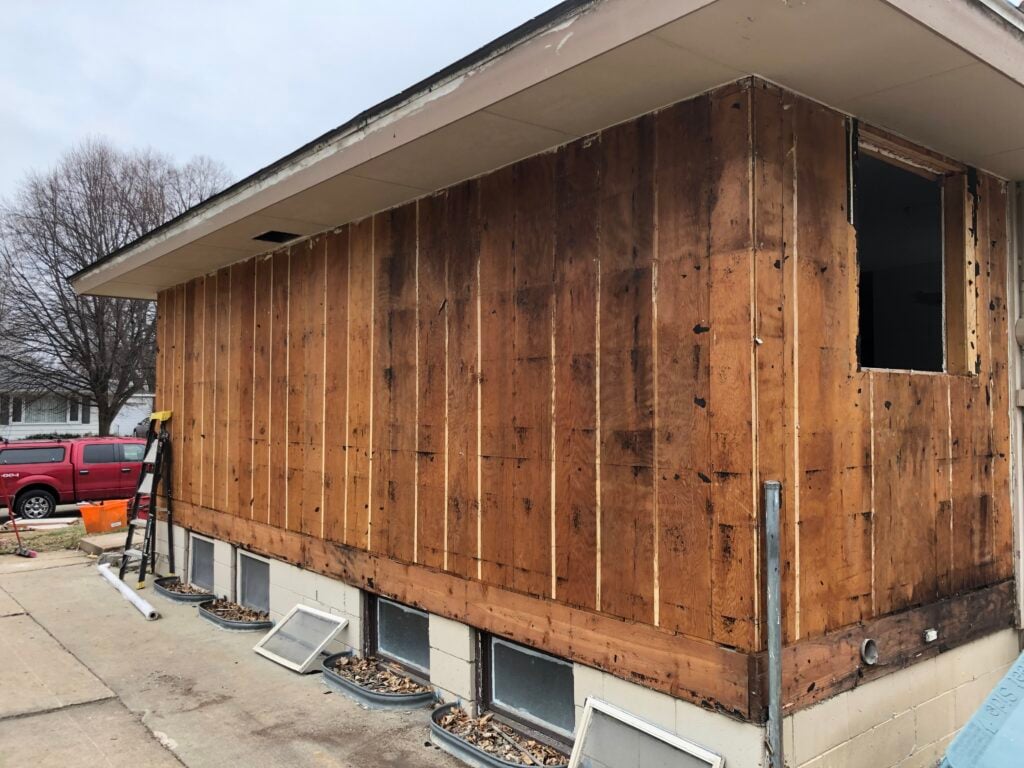
Asbestos was a popular building material for much of the twentieth century, prized for its durability, fire resistance, and insulating properties. It was widely used in siding shingles, particularly cement asbestos board, on homes built between the 1920s and the late 1970s. In undisturbed condition, asbestos siding is generally considered stable. The danger begins when the material becomes friable, meaning it can crumble or break, or when it is cut, drilled, or pried loose during removal. Once airborne, those microscopic fibers can lodge deep in the lungs and cause serious, irreversible disease.
Here is why taking this seriously from the start protects everyone involved:
- Health consequences are severe and long-lasting: Asbestos exposure is linked to mesothelioma, asbestosis, and lung cancer. Even hairline cracks or chips in old siding can release harmful fibers if the material is disturbed, and these diseases often do not appear until decades after exposure, which is why many homeowners underestimate the risk in the moment.
- Legal liability falls on the property owner: In most states, homeowners are legally responsible for ensuring asbestos-containing materials are handled and disposed of according to regulations. Improper removal can result in significant fines and remediation costs.
- Neighboring properties can be affected: Asbestos fibers are invisible to the naked eye and travel easily on the wind. A removal job done without proper containment can contaminate adjacent properties, vehicles, and landscaping.
- Future sale and inspection complications: Homes with improperly handled asbestos or incomplete documentation of removal can face serious issues during real estate transactions. Proper handling protects your investment now and down the road.
For homeowners in Bloomington and surrounding areas, local regulations and disposal requirements add another layer of complexity that makes working with a knowledgeable contractor especially important.
7 Steps in a Safe Asbestos Siding Removal Process
Safe asbestos removal follows a carefully sequenced process designed to minimize fiber release at every stage. Skipping any step, or rushing through it, increases the risk of contamination and regulatory violations. The process outlined below reflects industry best practices and the standards that licensed abatement professionals are required to follow. Understanding what each phase involves helps you evaluate whether the contractor you hire is taking the job seriously.
1. Professional Inspection and Testing
Before any work begins, the siding material must be tested to confirm the presence of asbestos. A licensed inspector will collect samples using strict protocols to avoid releasing fibers during collection. Those samples are sent to an accredited laboratory for analysis. Do not skip this step based on visual identification alone. Not all older siding contains asbestos, and not all siding that looks like asbestos shingles actually does. The inspector may also flag other asbestos-containing materials found during the walkthrough, such as pipe insulation, that should be addressed at the same time. Testing is the only way to know for certain what you are dealing with.
2. Regulatory Review and Permit Acquisition
Once asbestos is confirmed, the next step is understanding what your local jurisdiction requires. Regulations vary by state and municipality, covering everything from contractor licensing and notification requirements to disposal site specifications. In Minnesota, the Minnesota Pollution Control Agency sets standards for asbestos abatement that must be followed. Permits may be required before work begins, and failure to obtain them can result in stop-work orders and penalties.
3. Site Preparation and Containment Setup
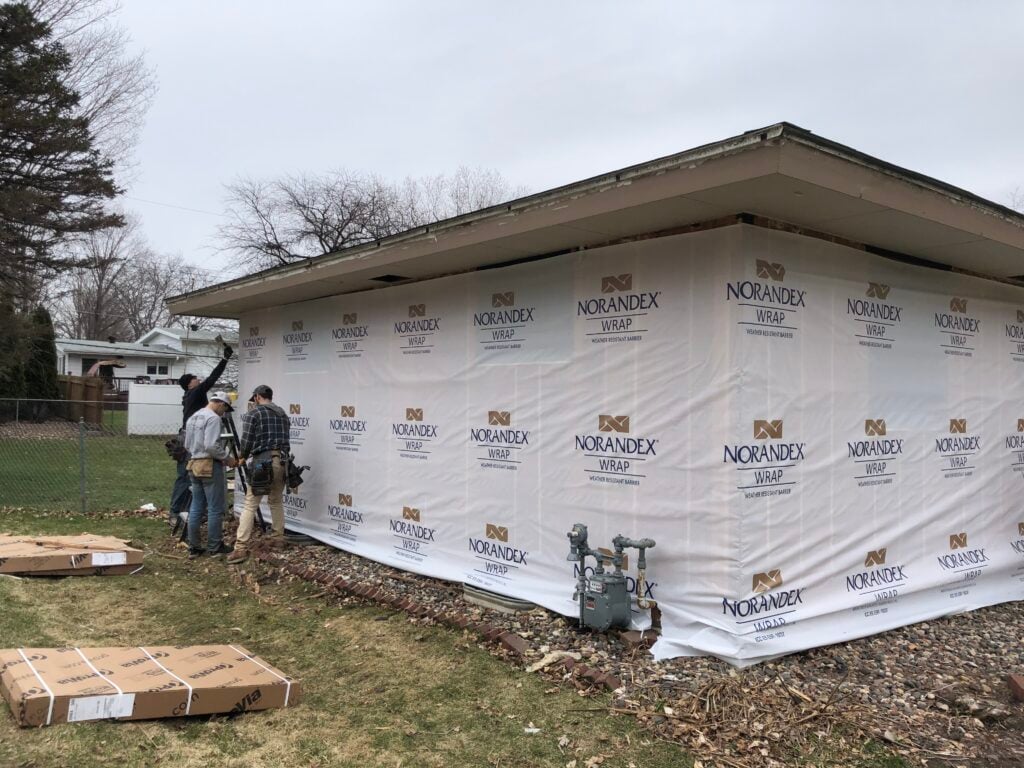
Before removal begins, the work area must be isolated. This includes sealing off HVAC intakes, covering landscaping and adjacent surfaces with plastic sheeting, and establishing a decontamination zone where workers can remove protective gear without tracking fibers into clean areas. Physical barricades should be placed around the perimeter to keep foot traffic out and prevent debris from spreading beyond the containment zone. For homes in Bloomington and surrounding areas, this is particularly important in neighborhoods with close lot spacing where fiber drift is a real concern.
4. Worker Protection and PPE Requirements
Anyone involved in asbestos removal must wear appropriate personal protective equipment. This includes a properly fitted respirator rated for asbestos fibers, disposable coveralls, gloves, and eye protection. Respiratory protection is the most critical element. Standard dust masks do not filter asbestos fibers. Only half-face or full-face respirators with P100 filters or supplied-air respirators meet the required standard for this type of work.
5. Careful Removal of Siding Panels
The actual removal is done by hand, panel by panel, with the goal of keeping each piece as intact as possible. Intact pieces release far fewer fibers than broken ones. Siding is wetted down before and during removal to suppress dust. Power tools, grinders, and anything that generates friction or vibration are strictly prohibited on asbestos-containing materials. Nails are carefully extracted rather than pulled through the panel face, which could cause the shingle to crack or break. Each panel is wrapped or placed directly into labeled, heavy-duty disposal bags without being dropped or stacked in a way that could cause breakage.
- Wet methods are used throughout to keep fibers from becoming airborne
- Panels are double-bagged in approved asbestos waste bags
- Bags are sealed, labeled with the appropriate asbestos hazard markings, and staged in a secure area
6. Proper Waste Disposal
Asbestos waste cannot go into standard dumpsters or municipal trash. It must be transported to a licensed disposal facility that is permitted to accept hazardous materials. In Minnesota, specific landfills are designated for this purpose, and the waste must be manifested, meaning paperwork must accompany it from the job site to the disposal facility. Your contractor should provide documentation of proper disposal, which you should keep on file permanently.
7. Post-Removal Clearance and Site Cleanup
Once all siding has been removed and bagged, the site undergoes a thorough cleanup. Remaining plastic sheeting is carefully folded inward and disposed of as asbestos waste. The area is then inspected visually, and in some cases air sampling is conducted to verify that fiber levels have returned to acceptable background levels before the containment is dismantled. This final clearance step is what separates a professionally completed job from one that cuts corners at the end.
Getting all seven of these steps right requires experience, licensing, and the right equipment. This is not the kind of job where you want to save money by choosing the lowest bidder without verifying their credentials.
What Asbestos Siding Removal Actually Costs
Cost is one of the first questions homeowners ask, and the honest answer is that it varies considerably based on the size of your home, the condition of the siding, and local disposal fees. That said, having a realistic range in mind helps you evaluate bids and avoid being steered toward options that seem too good to be true.
- Square footage is the primary cost driver. Most abatement contractors price removal by the square foot, with typical ranges falling between $5 and $20 per square foot depending on complexity. A 1,500-square-foot home with straightforward single-story siding will cost considerably less than a two-story home with gables, dormers, or multiple penetrations that complicate panel-by-panel removal.
- Disposal fees add to the base price. Licensed hazardous waste disposal is not cheap, and those costs are passed through to the homeowner. Disposal fees can add several hundred to several thousand dollars to the total project cost depending on the volume of material.
- Encapsulation is sometimes offered as a safer alternative to full removal. In some situations, encapsulating the existing asbestos siding rather than removing it is a code-compliant option. It involves applying a bonding compound to seal in fibers and prevent them from becoming airborne. It is less expensive upfront but limits future renovation flexibility, can be risky if the siding is already in poor condition, and may still need to be disclosed during a home sale. Many contractors serving Bloomington and surrounding areas can walk you through whether encapsulation makes sense for your situation.
- Always get multiple bids from licensed contractors. Pricing in abatement can vary significantly, and getting three bids allows you to identify outliers in either direction. A bid that is dramatically lower than the others is a red flag, not a bargain.
Planning Your New Siding Installation After Removal
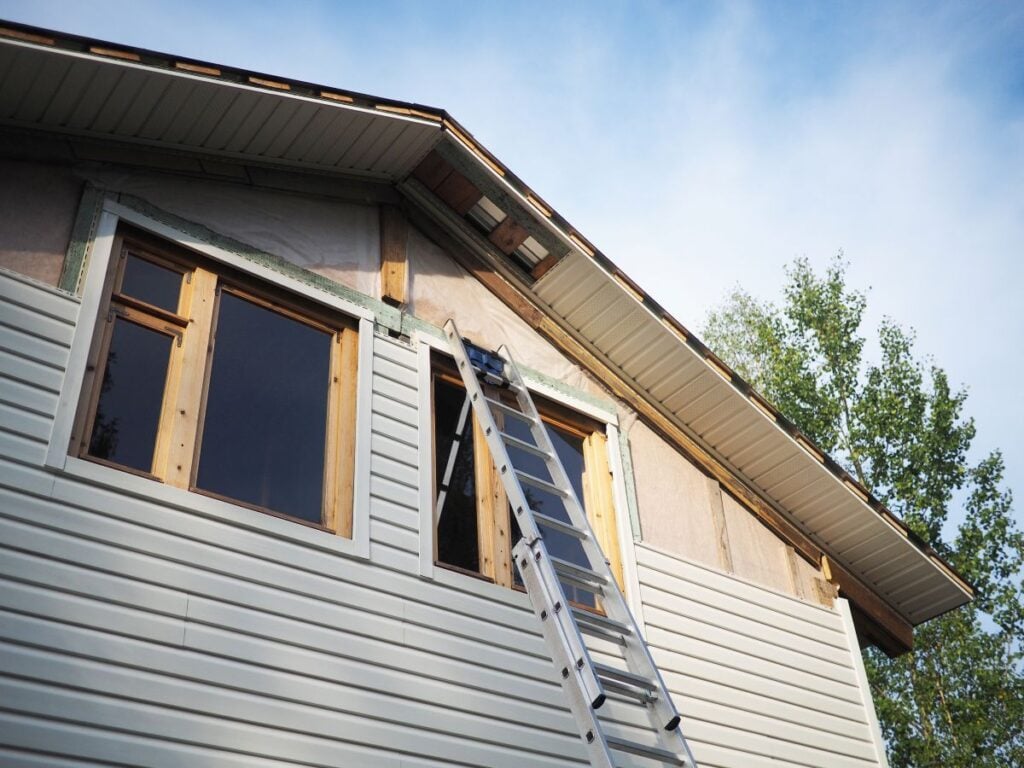
Removing asbestos siding is only half the project. Once the old material is gone, you have a clean slate to choose exterior cladding that fits your home’s style, your budget, and the demands of a Minnesota climate. This is actually one of the more exciting parts of the process, because the options available today far outperform what was on the market when your home was originally clad.
Fiber cement siding is one of the most popular replacements for asbestos shingles. It looks similar to the original material, holds paint exceptionally well, and is highly resistant to moisture, insects, and fire. It is also one of the most durable options available in cold climates. Engineered wood siding has grown in popularity as well, offering a natural wood appearance with better dimensional stability than real wood. Vinyl siding remains a cost-effective and practical safer alternative for homeowners prioritizing low maintenance and budget predictability, with modern profiles that look far more refined than older generations of the product. Each material has trade-offs in cost, appearance, and long-term performance worth discussing with your contractor before committing.
Timing matters too. Most exterior siding installation in Minnesota is best scheduled between late spring and early fall, when temperatures are stable enough for proper adhesion of sealants and primers. Planning your abatement and installation in sequence, ideally with the same contractor managing the overall project, reduces the chance of scheduling gaps that leave your home’s sheathing exposed to the elements longer than necessary. Homeowners in Bloomington and surrounding areas who start planning in late winter typically have the best luck securing their preferred contractor for a spring or early summer start.
The Safer Exterior Starts With One Phone Call
Asbestos siding removal is a project where the stakes are too high to improvise. The health risks are real, the regulatory requirements are specific, and the long-term implications for your home’s value and your family’s safety make professional, licensed abatement the only responsible path forward. At Puetz Construction, we work with homeowners to make exterior renovation projects as smooth and stress-free as possible, from understanding what needs to come off to helping you choose what goes on next. If your home has aging siding that may contain asbestos or you are ready to plan a full exterior update, contact us today and let’s talk through your project together.
Fresh From our Blog