Commercial Roof Insulation: 6 Types and Energy Savings Guide
Written By: Justin Puetz | June 3, 2026 | 8 Minute Read

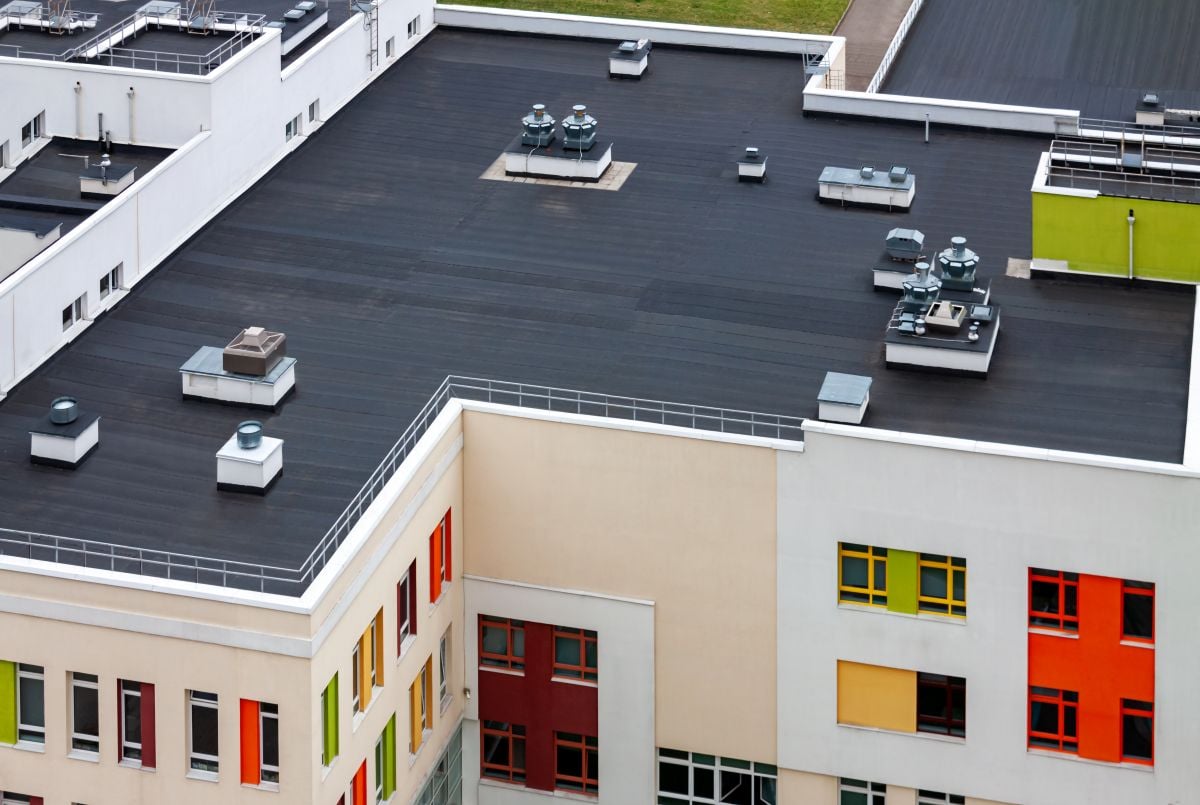
Choosing the right commercial roof insulation can be the difference between a building that hemorrhages energy costs and one that performs efficiently for decades. Whether you manage a warehouse, retail space, or office complex in Menomonie and surrounding areas, your roof is responsible for a significant share of your heating and cooling load. Understanding your insulation options puts you in control of both long-term comfort and operating costs. If you are planning a roofing project, exploring your options through professional commercial roofing services can help you make the most informed decision from the start.
What you’ll learn in this guide:
- Why roof insulation is one of the most impactful investments for commercial buildings
- The six most common types of commercial roof insulation and how each performs
- How R-value, moisture resistance, and installation method affect your choice
- Which insulation types pair best with popular commercial roofing systems
- How to maximize energy savings and extend roof longevity with smart insulation planning
Why Commercial Roof Insulation Is Worth the Investment
Many building owners underestimate how much their roof insulation affects the bottom line. A poorly insulated commercial roof allows conditioned air to escape in winter and lets heat pour in during summer, forcing HVAC systems to work overtime. Over time, that translates into thousands of dollars in wasted energy, accelerated equipment wear, and uncomfortable interior environments.
The benefits of investing in quality insulation go well beyond lower utility bills:
- Reduced energy consumption: Properly insulated roofs can cut heating and cooling costs by 20 to 30 percent annually, depending on climate and building use.
- Improved occupant comfort: Stable interior temperatures reduce hot and cold spots, making the workspace more productive and pleasant.
- Extended roof membrane life: Insulation buffers the membrane from extreme temperature fluctuations that cause cracking, splitting, and premature failure.
- Stronger building envelope: A continuous insulation layer reduces thermal bridging and minimizes the risk of condensation and moisture damage within the assembly.
For businesses in Menomonie and surrounding areas, where winters can be harsh and summers bring their own heat load, a well-chosen insulation system is not optional, making it a foundational part of any responsible commercial roofing plan.
6 Types of Commercial Roof Insulation
The commercial roofing industry offers a range of insulation materials, each engineered with specific performance characteristics. Knowing the strengths and limitations of each type helps you match the product to your building’s needs and your budget.
1. Polyisocyanurate (Polyiso)
Polyiso is the most widely used insulation in commercial low-slope roofing, and for good reason. It delivers one of the highest R-values per inch of any rigid board product, typically around R-6 per inch, making it ideal when thickness is limited by parapet height or drainage slope requirements. Polyiso boards are compatible with most single-ply and built-up roofing systems and can be installed in multiple layers with offset joints to minimize thermal bridging.
- Excellent thermal performance in moderate climates
- Lightweight and easy to handle during installation
- Available with foil, fiberglass, or felt facers for different applications
2. Extruded Polystyrene (XPS)
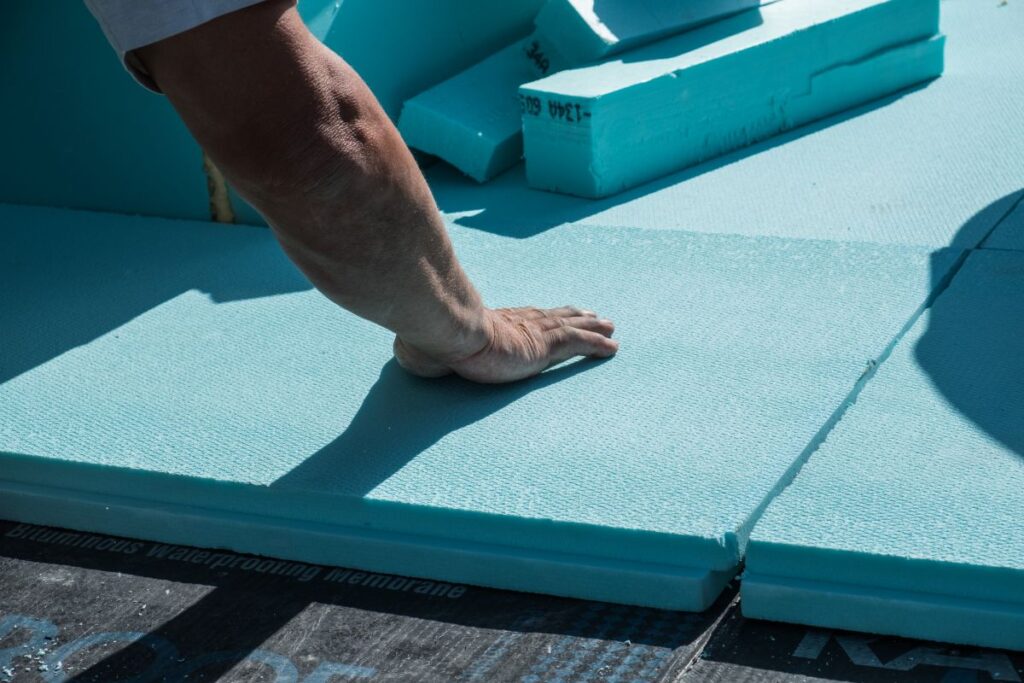
Extruded polystyrene offers a consistent R-value of approximately R-5 per inch along with outstanding moisture resistance. Because XPS absorbs very little water even after prolonged exposure, it is a strong choice for inverted roof membrane assemblies (IRMA), where the insulation is installed above the waterproofing layer. Its compressive strength also makes it suitable for roof decks subject to heavy foot traffic or mechanical equipment loads.
- Maintains R-value even when exposed to moisture
- High compressive strength for demanding applications
- Blue, pink, or gray color coding by manufacturer helps identify product lines on site
3. Expanded Polystyrene (EPS)
Expanded polystyrene is often confused with XPS, but the two are manufactured differently and perform differently under field conditions. EPS is produced by expanding polystyrene beads with steam, creating an open-cell-like structure within a closed-cell bead matrix. It is vapor-permeable, which allows any moisture that enters the assembly to dry out over time. EPS is available in a wide range of densities, offering flexibility for budget-conscious projects that still require solid thermal performance.
- More breathable than XPS, reducing long-term moisture entrapment
- Cost-effective option for large-scale commercial projects
- Compatible with adhesive application methods
4. Mineral Wool (Rock Wool)
Mineral wool insulation is manufactured from volcanic rock or industrial slag and spun into dense fiber batts or boards. It is naturally fire-resistant, non-combustible, and performs well under high heat conditions, which makes it particularly valuable in facilities with elevated fire risk, such as manufacturing plants or food processing operations. Mineral wool also provides excellent sound attenuation, reducing noise transmission through the roof assembly.
- Inherently fire-resistant with no need for additional flame retardants
- Effective acoustic barrier for buildings in high-noise environments
- Dimensionally stable and resistant to compression over time
5. Spray Polyurethane Foam (SPF)
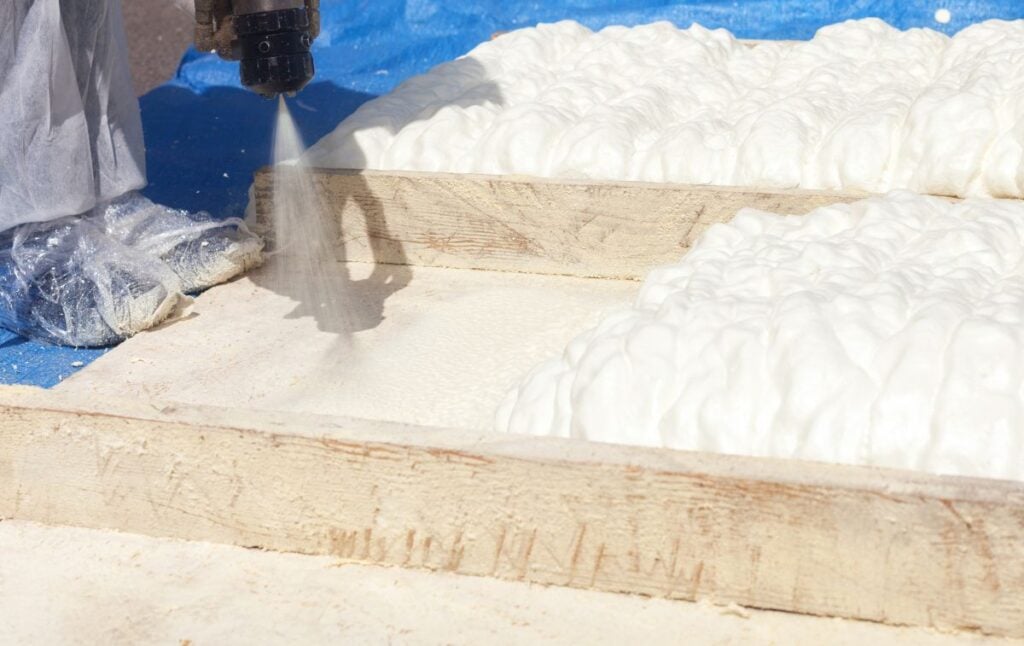
Spray polyurethane foam is applied as a liquid that expands to fill gaps, seams, and penetrations, creating a seamless monolithic insulation layer that also functions as an air barrier. Its self-flashing properties around curbs, vents, and parapets reduce the number of potential leak points. SPF is a particularly strong performer for buildings with irregular roof geometry or numerous roof penetrations, which are common in Menomonie and surrounding areas given the mix of older industrial and retail buildings.
- Seamless coverage eliminates joints and thermal bridges
- Serves as both insulation and air barrier in a single application
- Can be applied over existing roofing in qualifying re-roofing scenarios
6. Composite and Tapered Insulation Systems
Tapered insulation systems use boards cut at a factory-set slope to direct water toward drains on an otherwise flat roof. Composite systems combine two or more insulation types, most commonly polyiso over EPS, to achieve thermal performance goals while managing cost and thickness. These engineered assemblies are engineered to meet specific drainage, R-value, and compatibility requirements for the membrane system being installed.
- Tapered systems eliminate ponding water without structural modification
- Composite layers allow cost optimization without sacrificing performance
- Factory-cut accuracy reduces field cutting errors and waste
Each of these options brings something distinct to the table, and the best choice for your building will depend on the roofing system you are using, your climate exposure, your building’s use type, and your long-term energy goals.
How R-Value and Thermal Performance Actually Work
Understanding R-value is essential to making a smart insulation decision, yet it is often oversimplified in purchasing conversations. R-value measures thermal resistance: the higher the number, the more effectively the material slows heat transfer. However, R-value ratings are tested under controlled lab conditions, and real-world performance can vary based on temperature, moisture content, and installation quality.
- Temperature sensitivity: Polyiso’s R-value decreases at very low temperatures, which is a meaningful consideration for cold-climate buildings. In contrast, XPS and EPS maintain more stable R-values across temperature ranges.
- Installed R-value vs. nominal R-value: Thermal bridging at fasteners, seams, and penetrations reduces the effective R-value of any insulation system. Installing insulation in multiple layers with staggered joints is one of the most effective strategies for preserving real-world performance.
- Building code requirements: Energy codes have steadily increased minimum R-value requirements for commercial roofs. Most cold-climate jurisdictions now require R-25 to R-30 or higher for low-slope commercial applications.
- Moisture and long-term performance: Wet insulation loses thermal resistance. Specifying a product with low moisture absorption and including a vapor retarder where appropriate protects your R-value investment over the life of the roof.
Working with an experienced contractor helps you navigate these technical variables and specify an insulation assembly that meets code, performs in your climate, and fits your project budget.
Matching Insulation to Your Roofing System
Not every insulation type is compatible with every commercial roofing membrane, and mismatches can void warranties, compromise adhesion, or create long-term performance problems. Selecting the right pairing from the start is a critical step that is often overlooked until it is too late.
- TPO and EPDM single-ply membranes are commonly installed over polyiso or EPS boards with either mechanical fastening or full-adhesive application. Full-adhesive systems tend to perform better in high-wind areas, and the insulation’s facer material must be compatible with the adhesive chemistry being used.
- Modified bitumen and built-up roofing (BUR) systems generate heat during installation that can affect some insulation products. Polyiso with a glass-fiber facer and mineral wool boards are well-suited to these hot-applied systems because of their dimensional stability and fire resistance.
- Metal roofing and standing seam systems often use rigid board insulation between purlins or as a continuous layer beneath the panel, with EPS and mineral wool being popular choices depending on fire rating requirements.
- SPF systems are self-contained and act as both the insulation and the primary waterproofing substrate, requiring only a protective topcoat for UV exposure management.
For property owners and facilities managers in Menomonie and surrounding areas, matching the right insulation to the right membrane is one of the most impactful decisions you can make before the first fastener goes in.
Ready to Cut Energy Costs and Protect Your Investment?
A well-insulated commercial roof pays dividends in energy savings, occupant comfort, and reduced maintenance costs for years after installation. The six insulation types covered in this guide each offer real advantages in the right context, but the best solution for your building depends on your specific conditions, roofing system, and performance goals. Puetz Construction has the experience and product knowledge to help you evaluate your options honestly and design a roofing system built to perform. When you are ready to take the next step, contact us today to schedule a consultation and get straightforward answers from a team that stands behind its work.
Fresh From our Blog